Category: 📂 Weird History / Ancient World / Historical Ironies
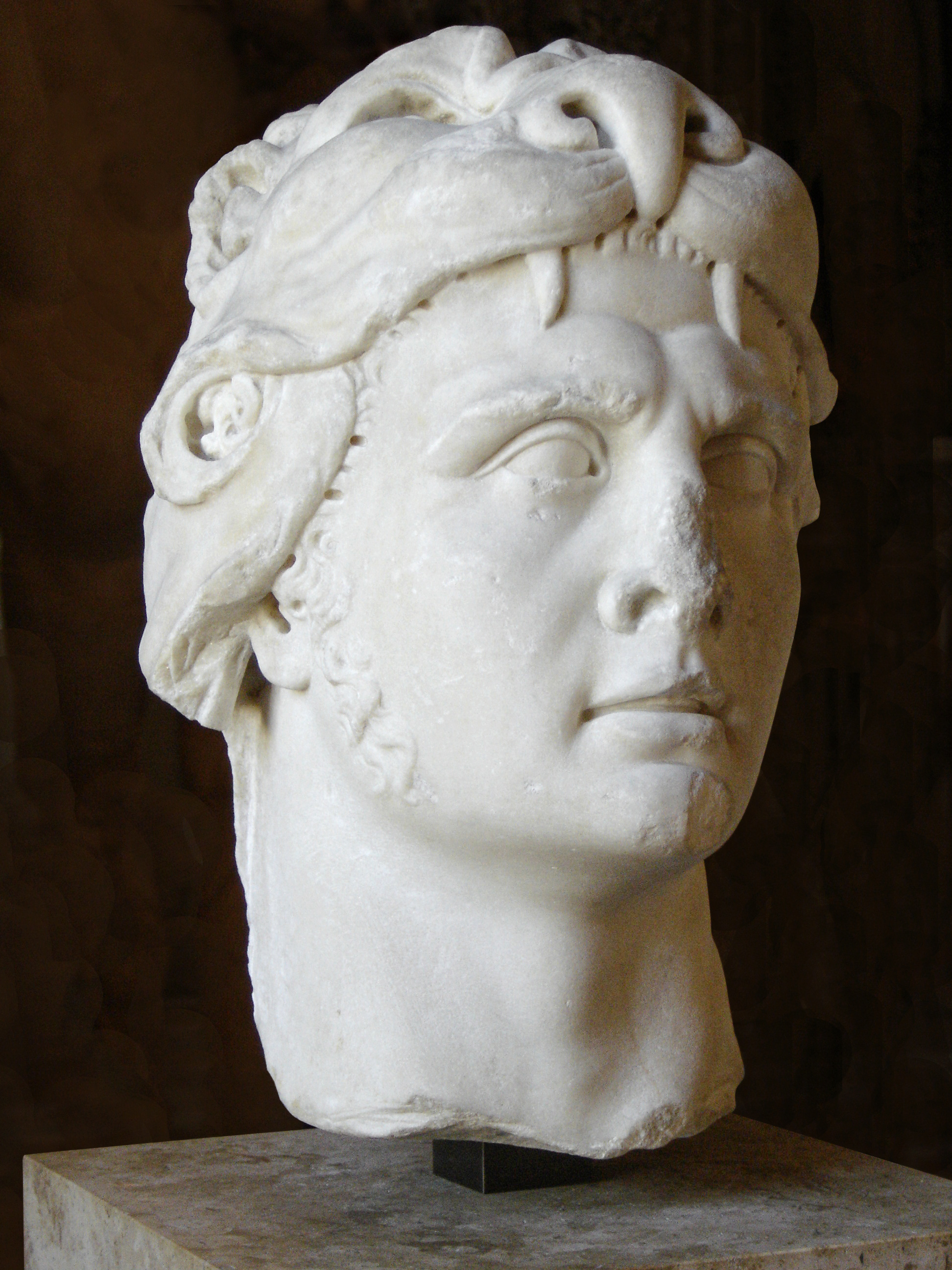
The ancient world was a brutal, unforgiving chessboard where political assassinations were a casual Tuesday afternoon occurrence. If you sat on a throne, your closest advisors, your ambitious siblings, and even your own children were actively plotting your demise. In this atmosphere of constant betrayal, no weapon was more feared, silent, or effective than a drop of poison in a royal chalice. While most monarchs lived in absolute terror of the cupbearer, one legendary ruler decided to wage a chemical war against his potential assassins. King Mithridates VI of Pontus feared death so intensely that he embarked on a lifelong toxicological experiment—accidentally transforming his own body into an indestructible laboratory and becoming completely immune to poison. However, his ultimate survival mechanism would eventually lead to one of the most tragic and mind-blowing ironies in human history.
The Tragic Childhood That Sparked a Toxic Obsession
To understand the sheer scale of Mithridates' paranoia, one must look at his chaotic upbringing. Born around 135 BC in the Kingdom of Pontus (modern-day Turkey), he was thrust into a den of vipers at a very young age. In 120 BC, his father, Mithridates V, was suddenly assassinated at a lavish royal banquet. The cause of death? A lethal dose of poison slipped into his wine, likely orchestrated by the young prince's own mother. Fearing that his mother and younger brother would target him next to clear the path to the throne, the eleven-year-old Mithridates fled into the wild, mountainous wilderness of Pontus.
For seven long years, the exiled prince lived like a ghost in the mountains, sleeping in caves and hunting for his own survival. It was during this grueling period of isolation that his obsession with toxicology blossomed. Mithridates realized that if he ever wanted to return, claim his birthright, and survive the treacherous royal court, he needed to make himself completely bulletproof against the silent killer that took his father. He began studying botany, pharmacology, and the defensive properties of local flora and fauna. He watched how wild animals interacted with toxic plants and began formulating a radical plan to weaponize biology against his enemies.
The Dangerous Routine of Consuming Death Daily
When Mithridates finally returned to the capital, overthrew his mother, and claimed his crown, his mountain experiments became official royal policy. He created a daily ritual that horrified his court but fascinated ancient doctors. Every morning, Mithridates would deliberately ingest non-lethal, sub-fatal doses of the most deadly poisons known to the ancient world. His rotation included arsenic, cyanide, deadly nightshade (belladonna), hemlock, and even the toxic venom of vipers mixed with the blood of Pontic ducks, which reportedly fed on poisonous hellebore plants without dying.
By slowly and systematically increasing the dosages over several decades, Mithridates unknowingly pioneered a biological phenomenon that modern medical science calls "hormesis" or mitridatizam—the process of introducing low-dose cellular stress to stimulate an adaptive, protective response. His body adjusted, creating antibodies and liver pathways capable of neutralizing deadly chemical compounds that would instantly kill an ordinary human being. He became a living anomaly, openly mocking the concept of poisoning, and creating an elite reputation that left the Roman Empire completely terrified of his unnatural resilience.

Mithridatium: The Ancient Elixir of Universal Immunity
Mithridates did not just want personal safety; he sought a universal cure-all. He combined his vast chemical knowledge to create a legendary antidote known throughout history as the Mithridatium (or Mithridate). This highly complex, mythical concoction reportedly contained between 36 and 54 distinct ingredients, including opium, myrrh, saffron, ginger, dried rhubarb, chopped vipers, and various rare mountain herbs, all bound together with pure Pontic honey.
The elixir became so famous that after Rome finally defeated Pontus years later, the legendary Roman General Pompey demanded that Mithridates' private medical diaries be translated into Latin immediately. For centuries following his death, European royalty, medieval popes, and Roman emperors regularly consumed variations of the Mithridatium every single day, desperate to mimic the universal immunity of the Pontic king. It remained a staple of official western pharmacology well into the 18th century, showcasing how one man's psychological terror altered the history of global medicine.
The Devastating Historical Irony of His Demise
While his chemical shield protected him from the shadows for over fifty years, it ultimately set the stage for one of history's most tragic and dark twists. As the ruler of Pontus, Mithridates waged three brutal, decades-long wars against the Roman Republic. However, in 63 BC, old age and continuous military pressure finally caught up with him. Betrayed by his own favorite son, Pharnaces II, who staged a violent military coup, the aging king found himself trapped inside his fortified palace in Panticapaeum, with Roman soldiers breaking through the gates.
Refusing to be captured, paraded through the streets of Rome in chains, and publicly humiliated, Mithridates decided to take his own life. He drew a vial of fast-acting, highly concentrated poison that he always carried with him for emergencies. He shared the lethal dose with his loyal daughters, who died within minutes. The king then swallowed the remaining liquid and waited for darkness to claim him. But nothing happened. His stomach merely gurgled, and his heart kept beating perfectly. His lifelong experimental routine had worked too well; his body refused to be poisoned. In absolute desperation, as Roman footsteps echoed down the corridor, Mithridates had to beg his mercenary bodyguard, a Gaul named Bituitus, to draw a sword and run him through. The king who spent his entire life building an empire of immunity was ultimately destroyed by the one thing he couldn't conquer: his own unstoppable resilience.
Sources
- YouTube — Watch the Full Visual Story of King Mithridates VI on Our Channel
- Wikipedia — Mithridates VI of Pontus: Life, Wars, and Toxicology
- World History Encyclopedia — Mithridates VI: The Poison King of Pontus
- National Institutes of Health (NIH) — Mithridatium: The History of the Universal Antidote
💬 Comments