Category: 📂 Weird History / Maritime Disasters / Human Anomalies
The Unsinkable Woman: The Mind-Blowing Survival Story of Violet Jessop
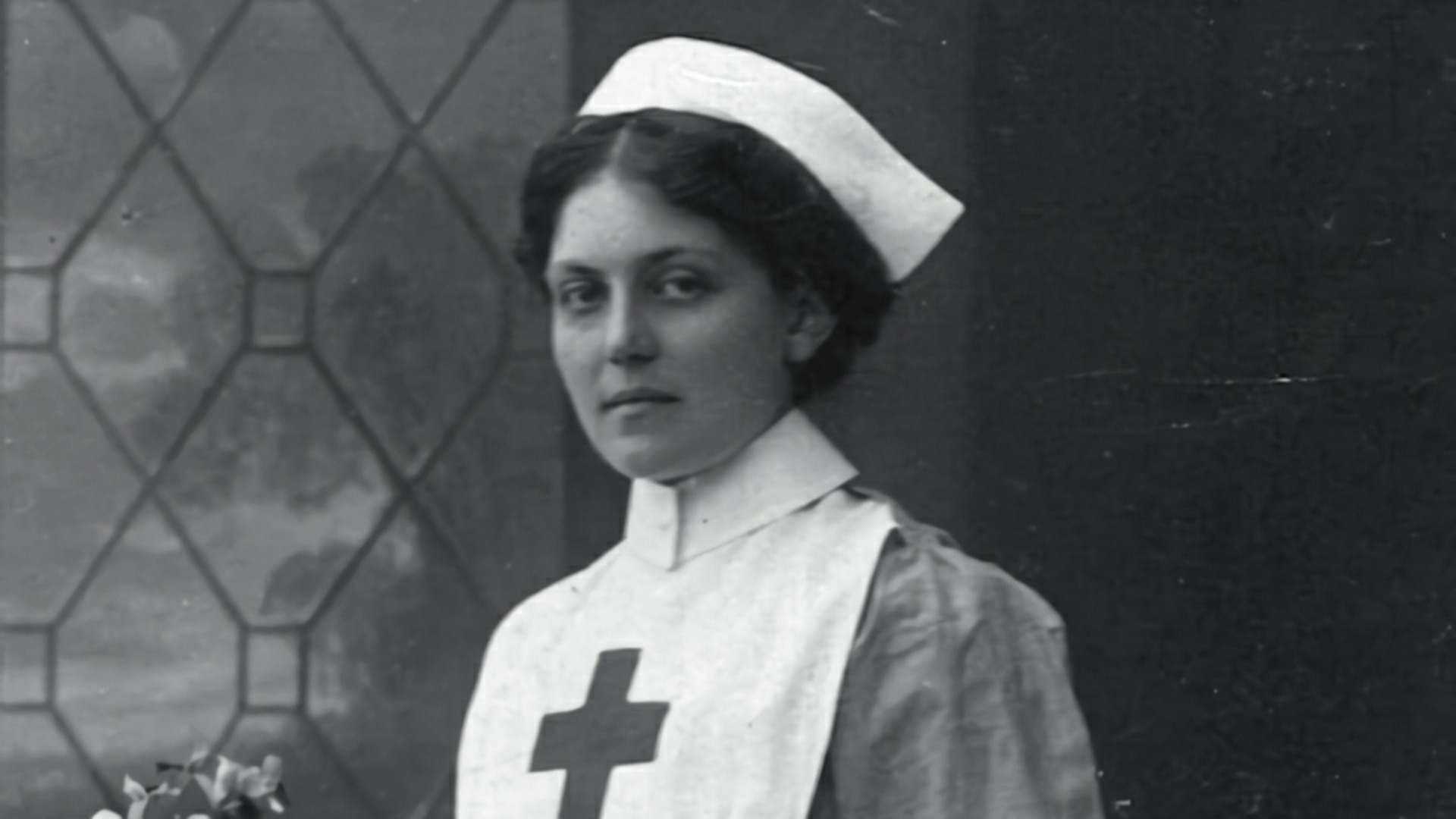
If you were boarding a massive, luxury ocean liner in the early 20th century and noticed a quiet, sharp-eyed ocean stewardess named Violet Jessop smoothing the blankets in your cabin, you would have had two choices: either feel incredibly safe or immediately demand a refund and sprint off the ship. Violet Jessop was an ordinary working-class woman who possessed arguably the most bizarre, double-edged cosmic luck in human history. To some, she was the ultimate walking curse—a maritime grim reaper who happened to be on board during three of the most catastrophic shipwrecks of the industrial era. To others, she was a walking miracle. Over the course of just five years, this single woman managed to survive the crushing collision of the RMS Olympic, the freezing midnight plunge of the RMS Titanic, and the terrifying, explosive sinking of the HMHS Britannic. This is the mind-blowing true story of the woman history officially remembers as "Miss Unsinkable."
The Violent Sinking That Wasn't
Violet’s run of unnatural survival started long before she ever saw an iceberg. Born in Argentina to Irish immigrants, she survived a childhood case of tuberculosis so severe that doctors gave her mere months to live. After her family moved to Great Britain, she followed in her mother’s footsteps and became a cabin stewardess for the prestigious White Star Line, the company famous for building the largest, most luxurious passenger ships in the world. In 1911, Violet was assigned to work on the maiden voyages of the brand-new flagship of the fleet: the RMS Olympic.
On September 20, 1911, the Olympic was cruising through the narrow waters of the Solent when a massive British warship, the HMS Hawke, miscalculated its turn. The warship's reinforced steel bow smashed directly into the side of the Olympic, tearing a massive hole below the waterline and flooding two watertight compartments. The impact was violent, twisting steel like paper and throwing passengers into a panic. Despite the heavy damage, the Olympic managed to limp back to port without sinking, and no lives were lost. Violet watched the chaotic evacuation calmly, dusted off her apron, and prepared for her next assignment. She had no idea that the universe was merely warming up.
Staying Calm on the Titanic
Seven months later, the White Star Line unveiled their crowning achievement: an even larger, supposedly "unsinkable" sister ship to the Olympic. It was called the RMS Titanic. Violet did not initially want to transfer to the new vessel, but her friends convinced her that working on such a historic voyage would look spectacular on her resume. On April 10, 1912, she walked up the gangplank of the Titanic as a first-class stewardess, catering to the richest and most powerful people on Earth.
Four days into the voyage, on the freezing night of April 14, Violet was sitting in her bunk, reading a prayer, when she felt a dull, grinding vibration echo through the ship's steel hull. The Titanic had scraped against a massive iceberg. Recognizing the danger faster than most passengers, Violet immediately rushed up to the deck. Because many of the wealthy non-English speaking passengers were paralyzed by fear and confusion, officers ordered Violet to stand near the lifeboats to act as a calm, reassuring example of orderly behavior. She calmly demonstrated how to wear lifebelts, helping women and children into the boats. As Lifeboat 16 was being lowered into the pitch-black, freezing Atlantic, an officer suddenly handed Violet a bundled-up, forgotten baby. She sat in that tiny boat for hours, clutching the unknown infant to her chest, watching the lights of the great ship snap out before it cracked in half and plunged to the ocean floor, taking over 1,500 lives with it.

Escaping the Underwater Blenders
Most human beings would have sworn off the ocean forever after watching the Titanic sink. But Violet Jessop was different. When World War I broke out, she volunteered as a nurse for the British Red Cross. In 1916, she found herself assigned to the third and final sister ship of the Olympic class, which had been converted into a massive floating hospital. This ship was named the HMHS Britannic.
On the morning of November 21, 1916, the Britannic was cruising through the Aegean Sea when a sudden, thunderous explosion tore through the front of the hull. The ship had struck a hidden German underwater mine. The explosion destroyed the watertight doors, and because the nurse staff had opened the portholes to ventilate the sick wards, the Britannic began sinking twice as fast as the Titanic. Within minutes, the ship was tilting violently into the water. Violet rushed to her cabin, grabbed her most prized possession—her toothbrush—and made a run for the upper decks.
This time, evacuation was a living nightmare. The captain was desperately trying to beach the ship on a nearby island, meaning the massive, spinning bronze propellers at the back of the ship were still rotating out of the water, acting like giant, underwater meat grinders. As Violet's lifeboat was lowered, the powerful suction of the ship dragged it straight into the spinning blades. Seeing the wooden boat being chopped into splinters, Violet made a split-second choice: she leaped out of the boat into the churning water. As she swam for her life, she was sucked downward, her head smashing violently against the ship’s steel keel. She went unconscious, but her lifejacket kept her floating until a rescue boat pulled her out of the blood-red water. Years later, a doctor discovered that she had actually suffered a fractured skull during the escape, but her thick bundle of auburn hair had cushioned the blow enough to save her life.
The Unsinkable Legacy of a True Pioneer
The Britannic vanished beneath the waves in just 55 minutes, but Violet Jessop walked away once again. What makes her story truly mind-blowing isn't just the sheer statistical impossibility of surviving three historical shipwrecks—it is what she chose to do afterward. She didn't retire to a quiet life on land. As soon as the war ended, Violet packed her bags, bought a ticket, and went right back to working on commercial cruise liners for another thirty years. She literally traveled the globe, crossed the oceans multiple times, and finally retired to a peaceful country cottage in 1950.
Violet Jessop died peacefully in 1971 at the age of 83, leaving behind a legacy that blurs the line between psychological toughness and pure cosmic resilience. Her life serves as a definitive historical reminder that when destiny tries to drag you down to the dark depths of the ocean multiple times, sometimes all you need is a stubborn refusal to sink, a bit of luck, and a steady hand to keep moving forward against the tide.

Sources
- Wikipedia — Violet Jessop: Complete Biography, Memoirs, and Marine Disasters
- Royal Museums Greenwich — Official Maritime Vault and White Star Line Transcripts
- Encyclopedia Titanica — Extensive Crew Records and Survivor Testimony of Violet Jessop
- YouTube Shorts — Check Out the Mind-Blowing True Story of History's Unsinkable Woman!
💬 Comments